
Welcome to the Humboldt Fogline. This webpage is dedicated to the community of Humboldt County for specific news regarding laws, government policies, and community concerns. Refreshed daily.
Humboldt county SCANNER; Law, fire, EMS north & south
Weather & Alerts
Humboldt · Del Norte · Trinity · Mendocino · Lake — from the National Weather Service in Eureka
Full forecast and radar (NWS Eureka)Road conditions (Caltrans QuickMap)
The Understory
Happenings in the Humboldt region
Court Report
Independent coverage of the Humboldt County Superior Court — hearings, sentencings, filings and the people involved. Headlines link straight to the reporter who wrote them.
John Chiv — Words Worth
is an independent blogger who faithfully dedicates himself to the Humboldt County courtroom for the purpose of sharing what happens in there. He is often the only reporter in the room. In his own words: “Business, politics and more with a current focus on Humboldt County, CA. Regular, detailed coverage of the Humboldt Superior Court.”
Read the blog Follow @wordsworth318 on X
Latest from the courthouse
Federal Criminal Cases by State
Total federal criminal cases filed in each state, all years from 2017 to now.
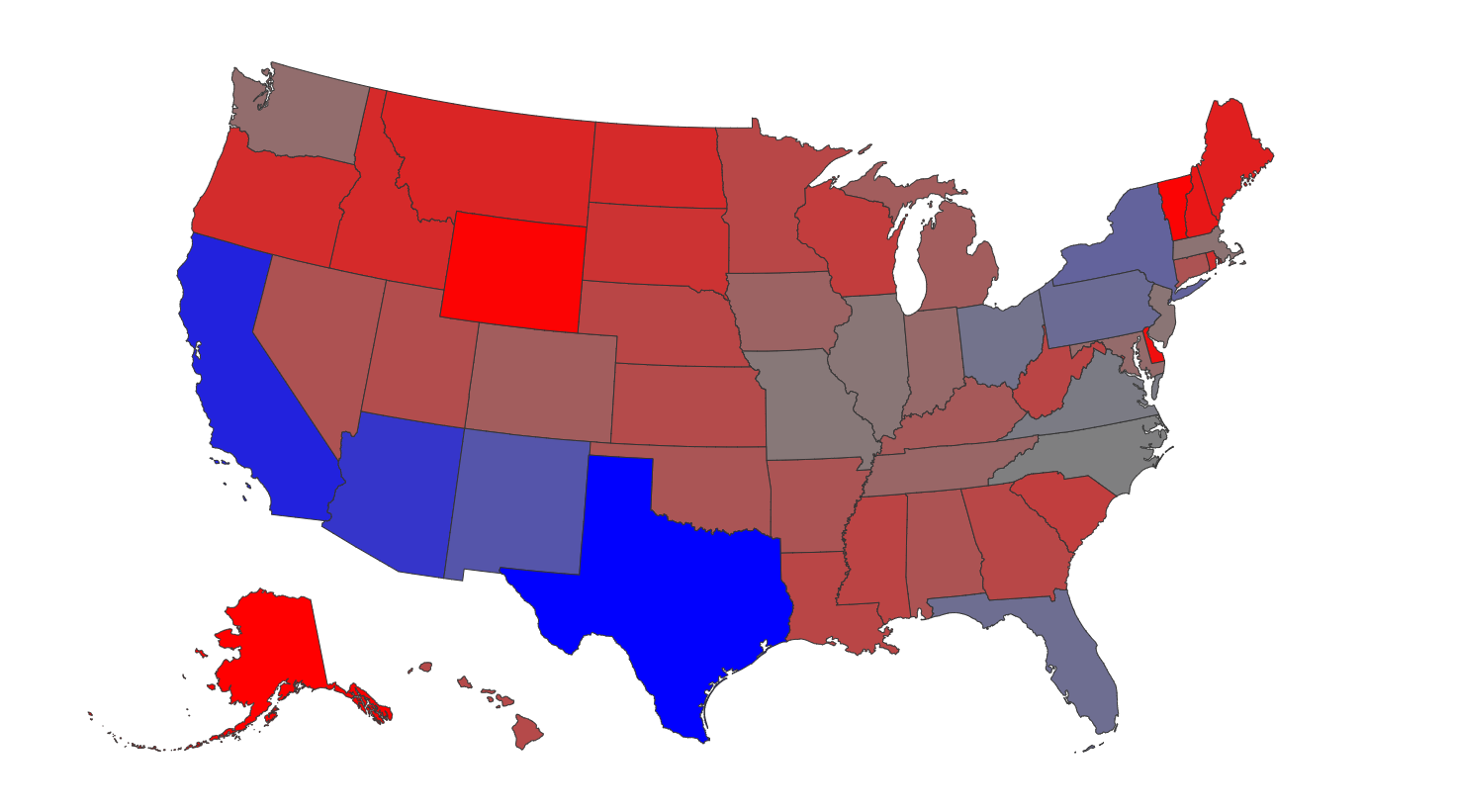
Colors show case counts only. They do not stand for political parties. Source: bad-boys.us, built from federal court records (PACER and CourtListener) and U.S. Justice Department press releases.
Open the full interactive map Opens an outside website. The interactive map works best on a computer.Meeting Notes
Meeting summary including public comment/concerns
Eureka City Council — October 6, 2026
Watch the meeting video (Access Humboldt)
▶ Listen to this summary (1 min 40 sec)
What the public said
Public comment has not been written up for this meeting yet.
- The video is now posted and linked just above, so you can hear the speakers for yourself. The written list is not ready yet: the city's own minutes are not posted, and the recording cannot be read from here. The news recap of the meeting named no members of the public.
- This section will be filled in as soon as the recording can be heard. Nobody is being left out on purpose.
What happened
- The council awarded a $698,626.50 contract to Mattingly Construction to build a 40-bed emergency shelter at 16 Second Street in Old Town. That is the $635,115 bid plus a 10 percent contingency. The vote was 5-0. The shelter is expected to open in early 2027.
- The council awarded a $2.17 million contract to Kernan Construction for paving work on N Street, Second Street and Harris Street. The vote was 5-0.
- The council extended its 45-day pause on new data center sites, so staff can write an ordinance setting limits. The vote was unanimous.
- The council formally adopted the Foreclosed and Vacant Property Registration Ordinance. It takes effect January 1, 2027.
- The council received the COPP Board's annual report, presented by board members Dino Novello and Mark Pardoe. No action was taken.
- The council received an update on expanding public restrooms. No action was taken, and staff will come back to the council at a later meeting.
Humboldt County Board of Supervisors — October 6, 2026
Watch the meeting video (Access Humboldt)
▶ Listen to this summary (2 min 51 sec)
What the public said
Public comment has not been written up for this meeting yet.
- The video is now posted and linked just above, so you can hear the speakers for yourself. The written list is not ready yet: the county's minutes are still marked draft, and the recording cannot be read from here. The board chair said the county had heard "very robust comments from the community" on the data center question.
- One news report named a single speaker, a resident of Arcata who supported going slowly, said Arcata was looking at its own pause, and said communities should set rules before large data centers arrive in rural areas. The spelling of her name in that report may not be right, so it is left out until the recording settles it.
- This section will be filled in as soon as the recording can be heard. Nobody is being left out on purpose.
What happened
- The board adopted a 45-day urgency ordinance pausing new data centers in the unincorporated parts of the county. The vote was 4-1, with Rex Bohn (First District) voting no. It took effect right away and can be extended for up to two years in total.
- The pause does not apply to data centers under 15 megawatts that run on 100 percent renewable power made on site, in a closed-loop system that does not draw on water supplies. Michelle Bushnell proposed that exemption. Mike Wilson had asked for a 5-megawatt limit, and 25 megawatts was discussed before the board settled on 15.
- On that item, Bohn said permitting already takes longer than 45 days and that most rural data centers are off-grid closed-loop systems. Bushnell said the Planning Commission process already lets the public weigh in. Wilson said the aim was to reduce anxiety in the community. Steve Madrone said he was voting on the side of ratepayers, and raised concerns about where the power would come from.
- The board approved a letter opposing Proposition 45, a ballot measure that would narrow what CEQA covers. The vote was 3-2, with Bohn and Bushnell voting no.
- The board approved a memorandum of understanding with the Redwood Coast Energy Authority, naming it the Regional Climate Committee to carry out the Regional Climate Action Plan. The county's share is $80,932 a year for a Climate Program Manager, and $323,731.72 in total through 2030.
- The board directed staff to put together a financing plan for $25,000 of sandbag supplies, ahead of an expected strong El Niño. Supervisor Bohn brought the request and it passed unanimously.
- Also on the agenda, with outcomes not yet confirmed: a 45-day pause on removing large redwood trees, changes to the public nuisance and penalty sections of the county code, a public hearing on renewing the solid waste container site and transfer station agreement, and a 26-item consent calendar. The consent calendar included proclamations for Week Without Driving and Breast Cancer Awareness Month, a five-year extension and membership expansion for the Fire Safe Council, HOME Investment Partnership applications of $1,810,078, an animal shelter ADA bid to Sequoia Construction Specialties, and a $647,500 crisis response training grant application.
Humboldt County Planning Commission — October 1, 2026
Watch the meeting video (Access Humboldt)
▶ Listen to this summary (10 min 19 sec)
What the public said
Eleven people spoke. Six called in during open comment, all about Miranda's Rescue. Four spoke on the Quantum Leasing cannabis permit, and the applicant spoke on the Black Dog Partnership project. One more caller tried three times but could not be heard. Here is each of them, in their own terms.
- Jamara, calling in during open comment, on Miranda's Rescue: she said the community is worried about the rescue's permit being reinstated. She said she has heard the operator is removing buildings, likely to try to come into compliance. Pointing to reports of dog remains found on the property, she said she does not see how the commission could reinstate a permit she said has been out of compliance for 26 years, and asked whether back fees will be paid.
- Julie, president of Fix Our Shelters, calling in on Miranda's Rescue: she said a conditional use permit is discretionary, and the commission has the power to approve, deny, suspend and require compliance. She said the rescue's required animal-care conditions were never put in place over 22 years, yet three cities in the county contracted with it. Pointing to reports of more than 100 dog remains found on the property and an ongoing criminal investigation, she said the commission had reason to withhold the permit and should not have let the rescue reopen.
- Marabel, calling in on Miranda's Rescue: she said she is new to Humboldt County. She called the situation shameful, said animals there could still be harmed, and asked everyone to act quickly for the animals and for a community she said is hurting.
- Lori, calling in on Miranda's Rescue: she asked for evidence that the commission has given any other permit holder 25 years to comply. She said the remaining conditions are still not met — rescue animals are kept on parcels the permit does not cover, unpermitted structures and trailers have not been removed, and the operator's attorney has said he keeps the right to euthanize and bury animals there. She said the animal pens still have not been raised above flood level and no proper sanitation system has been installed, so animals are at risk in a flood and animal waste may be reaching well water, groundwater and the river. She asked the commission to deal with every one of these.
- Jen, calling in on Miranda's Rescue: she said she is originally from California and now lives in Oregon. She said there has been little openness or up-to-date information about possible charges, though she knows that may not be the commission's job, and asked that something be done to protect the animals.
- Lee, calling in on Miranda's Rescue: a California resident whose family has vacationed for years around Fortuna and Ferndale, Lee asked why the rescue was not on the agenda for a real discussion, and why the animals have not been put in protective custody given the search warrants and evidence. Lee said the operator keeps getting extensions despite being behind on his permit for years, that he should be held accountable while the investigation goes on, and that Lee no longer feels comfortable spending money here on family trips.
- Sedna, calling in during open comment: the commission tried three times but could not hear this caller because of a sound problem. The chair invited Sedna to send the comment in writing so it goes into the record.
- Suzanne, of the consulting firm that prepared the application, on the Quantum Leasing permit: she said the owner runs a successful concentrate brand. She said the recent light leaks were malfunctions of an automated greenhouse system, fixed quickly, and not an attempt to light up at night. She said a nursery plan denied at the site about five years ago was different because it would have brought public traffic. She said odor should not change, traffic could go down, and water use would get more oversight. She asked the commission to decide based on the staff report, and said the owner gave money for road repairs the one time he was asked and would likely do so again.
- Ryan Kleiner, of 205 Triple K Place, the home closest to the operation, on the Quantum Leasing permit: he said Triple K Place is a small residential road where every home has children. He asked how approving this would make the road better or safer for those families, and said it would not. He said more commercial traffic means more wear, dust, noise and cost for the homeowners. He said bringing in freshly harvested cannabis would add to odor that already blows into homes on the north and northwest winds. He said lights at the operation were left on several nights in recent weeks, and questioned how much the neighborhood can trust that new conditions will be followed.
- Kristen Kelly, who lives on the property line and bought her home in January, on the Quantum Leasing permit: she said traffic and dust are worse than described — she counted about 100 trips on one Sunday during trim season, mostly parcel vans and cargo vans, and her children could not ride their bikes. She said road repair falls on the neighbors, and that joining the road association should be required. She said the odor and lights affect her family's health, the operation's guard dogs get out almost daily and chase her horses, trucks park on her land, and drivers swerve around potholes onto her property. She worried about her home's resale value, and asked how waste is handled for two trailers she said people live in full time.
- Eric, the applicant, on the Quantum Leasing permit: he said a new automated greenhouse system went in this year, and that the light leaks on September 11 and 18 came from a failing breaker and were fixed within about half an hour. He said traffic has not changed in years. He said the plan is to grow less in winter and bring in a small amount of product from his Carlotta farm — perhaps four to six trips — and process it into a much smaller product. He said the site has two ADA restrooms with their own septic system, that he has given money for road repairs when asked, and that he is open to joining a road association and setting delivery times.
- Suzanne, returning for the applicant: she told the commission the owner agrees to limit deliveries to 9 a.m. to 3 p.m., while children are in school.
- The owner of Black Dog Partnership (the McKinleyville Ace Hardware property), on his project: he said the culvert under Martin Road was already repaired last year after a neighbor's farm work crushed it, and will not be replaced or made bigger. He wants to turn a low-quality seasonal wetland into a year-round pond with a gravel path and benches for customers and employees. He said he would prefer future access to the housing area from Murray Road if a neighbor will sell, with the road beside Martin Road as a backup. Nobody else spoke on this item.
- Most callers were named only when the chair read the online list, so only first names are shown. Spellings come from the meeting's automatic captions and may need correcting.
What happened
- Six commissioners were there: Todd Fulton, Lorna McFarlane, Jerome Qiriazi, Sarah West (chair), Peggy O'Neill and Noah Levy. Iver Skavdal was absent.
- The Quantum Leasing permit was pulled off the consent calendar to be heard on its own. The rest of the consent calendar passed by voice vote: the last meeting's minutes, a permit extension for the Pastori minor subdivision near Eureka, and the final extension for the Parks major subdivision in McKinleyville.
- Quantum Leasing LLC, Rohnerville area south of Fortuna, near the Rohnerville airport: the property already has a permitted cannabis grow of about 10,000 square feet, approved in 2017. The request adds cannabis distribution and non-volatile manufacturing (ice-water extraction and a rosin press), using cannabis grown there plus some from the same owner's farm in Carlotta. It needed a full hearing because it is in a community plan area. Staff said yearly inspections had found it in compliance, but neighbors recently sent photos of a greenhouse lighting violation, which staff is now following up. A wholesale nursery plan for the same site was denied by the commission a few years ago.
- The permit was approved 4–2. Yes: Levy, West, Qiriazi and McFarlane. No: O'Neill and Fulton. Two conditions were added: commercial deliveries only 9 a.m.–3 p.m. on weekdays, and the owner must join a road maintenance association or pay a fair share of road upkeep. A condition already in the permit requires a wastewater plan approved by the Regional Water Board and county Environmental Health before manufacturing starts.
- Commissioner Fulton said he wanted problems with the existing permit fixed first, and that he has seen more light leaks than the ones reported. Commissioner McFarlane said she did not like it but, with the new conditions, could not find legal grounds to deny it. Commissioner Levy said the record does not show a badly run permit and the change would not add much impact.
- Black Dog Partnership, McKinleyville (Central Avenue, south of Murray Road): approved 6–0. The project lets the hardware store expand with 56 more parking spaces, which staff said should keep employees from parking on neighborhood streets. Scattered wetlands, some filled without permits in the past, will be gathered into one strip down the middle of the site, replaced 2 to 1 for the highest-quality wetlands and 1 to 1 for the rest, with at least five years of monitoring. A lot line change moves 2.95 acres from home zoning to commercial so no parcel is split between two zones; the commission recommended the Board of Supervisors approve that zoning change. The east side is set aside for possible future homes, which would come back to the commission as a subdivision. A proposed new street, "Ace Avenue," would run beside Martin Road. One commissioner disclosed living within walking distance.
- Miranda's Rescue update: Planning Director John Ford said the rescue missed its first compliance-agreement deadline on September 30, so on October 1 the county sent a letter suspending its permit. While suspended, it cannot take in or adopt out animals. A suspension can last up to 180 days; then it must be lifted or sent to the Board of Supervisors, the only body that can revoke a permit. He said the land-use permit is being kept separate from the criminal investigation, and that the permit holder is owed due process. He agreed to keep giving the commission updates.
- A commissioner asked about AB 1033, a state law that lets counties allow backyard homes (ADUs) to be sold separately, like condos. Staff said it is on the work plan, along with an update to the county's ADU rules.
- Next meeting is October 15, 2026. Staff plans to bring the Humboldt Bay Area Plan. Commissioner McFarlane will be absent.
Humboldt County Association of Governments (HCAOG) — September 17, 2026
Watch the meeting video (Access Humboldt)
▶ Listen to this summary (5 min 12 sec)
What the public said
One member of the public, Colin Fisk, spoke by phone or video, on several items. Nobody spoke during open comment or on the hydrogen study. Here is what he said, in his own terms.
- Colin Fisk, with the Coalition for Responsible Transportation Priorities, accepting the Transit Month proclamation: he thanked HCAOG for signing a letter to Governor Newsom and the two candidates for governor asking for steadier, higher state funding for transit in Humboldt County. He thanked the executive director for doing a ride-along with a local bus rider and invited board members to do one too. He encouraged everyone to join the transit ride contest and the Week Without Driving, October 1–8.
- Colin Fisk, on Ride Humboldt Flex: he said Flex could cover the low-density edges of our towns, where people need service but a fixed bus route does not make sense. That could let the main routes (Redwood Transit, and maybe Eureka and Arcata transit) run more efficiently. He also praised local bus drivers, and said on Flex you get to know your driver.
- Colin Fisk (the caller sounded like him again), on the PACT transit survey: he stressed that the survey maps are NOT proposed routes — they only show the trade-off between frequent buses in a smaller area and less frequent buses over a wider area. He worried people will find that confusing and asked the board to help explain it. He said the more money goes to transit, the fewer trade-offs are needed, and that to meet climate goals, ridership matters more than coverage.
What happened
- HCAOG is the group of local city and county leaders that plans roads and transit for the county. There was a quorum. Supervisor Steve Madrone attended remotely because he was sick.
- The board proclaimed September 2026 as Transit Month, and October 1–8 as the Week Without Driving, encouraging officials and residents to try the bus.
- Hydrogen fueling stations study: consultants presented a draft study, paid for by a Caltrans grant, on where hydrogen fuel stations for buses and freight trucks could go across the 8-county North State. Sites that came up again and again include Humboldt Transit Authority's station, Redding, Lake, Mendocino, Nevada and Tehama counties, and the Redwood Coast. Stations along I-5 would help pay for themselves by serving trucks. Board questions covered safety (the fuel is trucked in as a liquid) and station breakdowns (not part of this study). It was information only; no vote.
- Ride Humboldt Flex: Humboldt Transit Authority's general manager explained its new on-demand small-vehicle service. You book a same-day ride by app, at ridehumboldt.org, or by phone, between bus stops and extra "virtual" stops. It runs weekdays 7 a.m. to 10 p.m., with no Sunday service. It costs $2 per person per zone and $4 more to cross into the next zone (no more than $6). The code FLEXUP gives two free rides. Rides must be prepaid, riders 12 and up can ride alone, and student and city bus passes are not accepted. There are no plans yet to reach Trinidad.
- The advisory council's consent calendar (August 20 minutes) was approved.
- PACT transit survey: staff said a public survey opens by about October 2 and stays open four weeks. It asks whether people would rather have more frequent buses in busy areas or buses that reach more places less often. Today's system is about 60% coverage and 40% frequency. The maps are examples only.
- The board approved its consent calendar in a roll call vote, with every member present voting yes: a new social media policy, a surplus property policy, and personnel policies.
- Unmet transit needs hearings are coming to each council: Blue Lake (next week), Fortuna Oct. 5, Eureka Oct. 6, Humboldt Transit Authority Oct. 7, Trinidad Oct. 13, Rio Dell Oct. 20, Ferndale Oct. 21, Arcata Nov. 4, and HCAOG Nov. 19. The county's date is not set yet. A survey is open now on HCAOG's website. The final Regional Climate Action Plan comes back to the board in October.
- Caltrans update: emergency repairs on the Eureka Slough bridges should finish in-water work by October 15. The southbound slow lane closes weekdays about 9 a.m.–1 p.m. South Broadway striping, including a separated bike lane, should wrap up in about two weeks. The speed limit at the Indianola undercrossing goes to 60 mph, with a later survey expected to support 65. Planning grant applications are due October 9.
- Humboldt Transit Authority update (Supervisor Natalie Arroyo): ridership is finally above pre-COVID levels, with over 700,000 rides last fiscal year. The temporary hydrogen fueling station is down, which limits how many buses can run. Southbound buses are full of Southern Humboldt high school students going to the Academy of the Redwoods. The bus to Ukiah takes about 3.5 hours and costs $2.
Humboldt County Planning Commission — September 17, 2026
Watch the meeting video (Access Humboldt)
▶ Listen to this summary (7 min 9 sec)
What the public said
Seven people spoke during public comment, all on the two tree-removal permits. Dale Maples, the forester Stephen and Thomas Moulder each spoke on both. Nobody spoke on the cannabis item. Here is each of them, in their own terms.
- Larry (last name unclear on the recording), a neighbor who owns tree #1 in the Call project, on the Call permit: he was born on the property in 1949 and has lived there since 1993. His father left these trees along the fence line in the 1940s and 50s when they were small. Now 11 trees over 100 feet tall block all sun from his house from mid-December to mid-April. He asked to remove the 71-inch tree, and offered a compromise of removing two other nearby trees instead if the big one must stay. He said he is not trying to make money, just get some sunshine. He also said the gravel-road condition is a heavy burden on small "mom and pop" owners when big timber companies use dirt roads, and log prices are very low.
- Lewis Call, the applicant, on his permit: the trees are huge and will likely fall on his house someday. He said it is a prime growing site, that cutting a few trees costs more than cutting many, and that they are already about $6,000 into the project without cutting anything. He agreed the gravel-road rule seems excessive and arbitrary.
- Dale Maples, of Pigeon Point Road (applicant on the second item), on the Call permit: he asked the commission to stick to the rules already on the books — trees over 60 inches and older than the year 1800.
- Lucas Titus, CAL FIRE unit forester for the Humboldt–Del Norte unit, on the Call permit: if the county wants size limits on trees, it should first pass an ordinance, work through the county's forestry advisory group and licensed foresters, and follow existing state rules, so the county is not "practicing forestry without a license."
- Stephen (last name unclear on the recording), the registered professional forester who wrote both plans, on the Call permit: most of these trees are about 70 years old on fast-growing ground. The 150–300 foot zone is thinning only, not clear-cutting. He agreed tree #2 must go because it is within 30 feet of a house, and said CAL FIRE fire-safety rules favor smaller, spaced-out trees near homes.
- Thomas Moulder, calling in, on the Call permit: he manages timber land sustainably and plans to pass it to his great-grandchildren. He said the county is overreaching and over-regulating, and it makes him think about pulling out of his long-term timber plan and clear-cutting. He warned the county could be liable if a tree it refuses to allow cut falls and hurts someone. He noted he holds a logging license and may be seen as biased.
- Dale Maples, the applicant, on his own permit at 5177 Woodland Way: a native of Humboldt County who loves redwoods, he is downsizing after almost 30 years in Eureka. The house there burned three years ago; he redesigned the rebuild to be all-electric with solar panels and batteries, and paid for a hazardous-material cleanup. The tree in question dropped a 6-inch branch last year about 30 feet from the house, and it shades the solar panels most. He counted 54 redwoods on the 3/4-acre lot and wants to remove only 8.
- Mark (last name unclear on the recording), with a consulting firm working on the Maples property, on the Maples permit: tree #5 does not meet the state's "large old tree" test, is not protected habitat under the Coastal Act, and is not a public scenic view. He asked the commission to drop condition #1 and let tree #5 be removed.
- Stephen, the forester, on the Maples permit: the owners did not know these new limits were coming and it has cost them money. This is about fire safety — fires do reach these outer coastal areas, and burning trees can fall on homes.
- Thomas Moulder, calling in again, on the Maples permit: the tree moratorium the Board of Supervisors will take up is not yet approved and may be a split vote, with a new 5th District supervisor coming soon. He said some argue owners can cut trees for their own use without a permit, and warned that heavy rules could push owners toward clear-cutting, as he sees on a nearby ridge.
- During open comment (items not on the agenda), one property owner came to the podium but was asked to wait because his topic was on the agenda. No other open comment was given.
- Some last names above could not be heard clearly on the recording, so only first names are shown.
What happened
- Only four commissioners were there: Iver Skavdal, Jerome Qiriazi, Lorna McFarlane and Todd Fulton. Sarah West, Peggy O'Neill and Noah Levy were absent.
- Consent calendar passed by voice vote, including the Sept. 3 minutes and a permit extension for RPCA Solar 5 LLC (corrected to the Blue Lake area, not Alton).
- Call tree removal, 4082 & 4050 Lentell Road, east of Eureka (G1): about 80 trees, mostly redwood, from about 4 acres for CAL FIRE fire-safety zones around three homes. Staff wanted to protect all trees 60 inches and wider (except tree #2 near a house) and cap removal of 40–60 inch redwoods at 25%. Staff said the Board of Supervisors has asked for a tree preservation ordinance and a pause on cutting large redwoods, which goes to the Board on October 6.
- The commission instead approved it 3–1 (Skavdal, Qiriazi, Fulton yes; McFarlane no). New conditions: no "large old trees" under state forest rules may be cut, and all work must follow the CAL FIRE permits under the forester's supervision. The findings say the application came in before the moratorium talks began, so this is not meant to set a precedent. The gravel-apron rule stays but only means rocking about 50 feet where trucks meet the county road.
- Commissioner McFarlane said she voted no because such a debated item deserved the full commission.
- Maples tree removal, 5177 Woodland Way, off Pigeon Point Road (G2): 8 redwoods (12 to 63 inches) on a 3/4-acre lot. Staff wanted tree #5 (about 64 inches, 162 years old, double-topped) kept. The commission dropped that condition and approved it 3–1, same split, with the same "not a precedent" finding.
- Indoor cannabis rule change (G3): recommended 4–0 that the Board of Supervisors let indoor grows (up to 5,000 sq. ft., parcels of 5+ acres) in AE, AG, FR and U zones use buildings built after Jan. 1, 2016. All other limits stay, like renewable energy and no conversion of prime soils or timberland.
- Coming up: the Humboldt Bay Area Plan is expected on October 15. Staff is still working on the low-impact camping ordinance. Next meeting is October 1, 2026 at 6 p.m.
Humboldt County Board of Supervisors — September 15, 2026
Watch the meeting video (Access Humboldt)
▶ Listen to this summary (7 min 32 sec)
What the public said
Six people spoke during public comment, most of them on more than one item. Here is each of them, in their own terms.
- Kent Sawski, on the consent calendar: he asked for a bus route to the San Francisco airport that does not require transfers, said he hoped the more than $16.5 million in Health and Human Services spending on the consent list would be used productively, supported converting ranch land to managed timberland even though it comes off the tax roll, and said the county reinstating permits it had revoked was a sign that enforcement worked.
- Kent Sawski, in open public comment: he endorsed Vera "Nona" Winona Pitts for Blue Lake City Council and spoke against the other candidates in that race. He also thanked Supervisor Mike Wilson for his work at the Coastal Commission, which he said should return some county control over public access at Centerville Beach.
- Kent Sawski, on the state legislative report: he urged the county to push hard for the animal rescue bill. He spoke against offshore wind, saying the ocean will eventually wreck whatever is built out there, that a heavy-lift terminal at the port could later be declared a strategic port and taken over by the federal government for offshore oil, and that federal reports have raised concerns that undersea transmission lines could disrupt fish and marine mammal migration and harm the local fishery. He said tribes should have a majority seat at the table on offshore wind, and urged the county to move slowly on artificial intelligence.
- Kent Sawski, on the surveillance item: he said there is a real difference between privacy on a public road and privacy in your own backyard, and raised concern about drones being used illegally. He described a recent encounter at his home that left him feeling unsafe and said his security cameras help. He said he would trade some privacy for safety, and believes many older residents who never come to meetings feel the same way.
- Kent Sawski, on the District Attorney's budget request: he said he would support the transfer only as a one-time fix and not a second time, asked how much would be left in the county's contingency fund, and said he is disappointed in parts of the local court system. He said he and others would object if charges are not pursued in the Miranda's Rescue case. On the closed session items he spoke in support of Public Works Director Tom Matson, and asked county counsel to look into two public records requests he says have gone unanswered.
- Joan McGary, on the consent calendar: she told the board that local musicians held a sold-out tribute concert on September 6 after Dolly Parton's death that raised more than $3,000 for the Bridgeville Imagination Library, and that the first book children receive from the program is "The Little Engine That Could." She said the Sheriff's office remodel is necessary, but reminded the board that the grand jury has called for upgrades to the county animal shelter and asked what is being done about it. She also said she rides the bus and that stops along the walk between the airport bus and services like animal control need improving.
- Joan McGary, in open public comment: she said transportation is the top concern in the county's climate action plan, and that she is worried the county is not ready for the flooding, heavy rain and coastal wave action a strong El Niño could bring — including on the Humboldt Bay Trail. She asked for more public information, education and involvement on getting around safely in bad winter weather. She also noted the International Day of Peace on September 20 and asked the board to revisit its ceasefire resolution, saying she had learned United Airlines is again shipping weapons parts to Israel on passenger flights.
- Joan McGary, on the legislative report: she said she worked in animal welfare in San Francisco for 16 years, and that alongside any new state licensing for rescues, the state's Hayden Act of 1998 should be revisited and strengthened — particularly its rules on accepting and holding animals.
- Dale Bagley, of Fortuna, in open public comment: he described a long dispute over a road he says his family has used to reach their property for 53 years and that he was locked out of in June 2026. He said he sued for a prescriptive right of way and lost. He asked the board to request that the state Attorney General review the judge who decided his case, and said he would be back with more.
- Thomas Moulder, calling in during open public comment: he again asked the county to send a letter of support for the local cannabis industry and to take a position in the state Department of Cannabis Control's current rulemaking, saying he has raised it about five times. He said cannabis brings economic value to the county but gets set aside for hot-button topics, and that county roads are in poor shape for what property owners pay in taxes.
- Thomas Moulder, on the legislative report: he said cannabis license holders who live on site pay about three times as much for insurance, and that he has spent six figures on fire insurance for a modest home since getting his state license. He also questioned whether the board was following its own conduct rules when supervisors commented on the current federal administration and on China.
- Thomas Moulder, on the District Attorney's budget request: he said he was the victim of a white-collar crime in which a defendant facing 12 felonies and two misdemeanors pleaded to one felony and left the state, leaving him owed more than $300,000. He said he wants full prosecution rather than plea bargains, and asked what is being done about repeat offenders. The District Attorney said that case was resolved before her time in office.
- Diana Preston, of Eureka, calling in during open public comment: she said she is 82 and spoke about street lighting. She now avoids B Street after dark and walks up Myrtle instead. She said the brightly lit stretches create optical illusions that make the curb hard to see and that she has nearly walked over it, while the dimly lit stretches are easy to walk. She said dimmer light works better for older people and for people who work outdoors at night, and invited anyone to walk the route and see for themselves.
- Bonnie Blackberry, a Southern Humboldt resident, calling in on the surveillance item: she said forming the committee is a good idea, and that the rules should cover more than the Flock cameras — including the satellite imagery used for building, planning and code enforcement, and any other surveillance going on. She asked how all of it fits with the right to privacy.
What happened
- The board voted 4-1 to dissolve the committee that was reviewing Flock Safety surveillance cameras, and replaced it with a broader committee that will write countywide rules for all surveillance technology by the end of 2027. Supervisor Rex Bohn cast the "no" vote.
- The District Attorney's office overspent its budget by about $1.3 million. Supervisors said no to covering the shortfall with the county's emergency contingency fund.
- The county's lobbyists reported they're tracking about 60 bills in Sacramento — backing 20, opposing 4. Wins included blocking a billboard-development bill and a utility commission restructuring bill. The county also landed $1 million toward a new one-stop permit center.
- The board approved an $892,577 contract to remodel the Sheriff's main station for ADA (accessibility) compliance, and approved buying a property at Fourth and L Streets in Eureka for $550,000.
- September 25, 2026 was proclaimed "Dolly Parton Day" in Humboldt County, honoring her Imagination Library book program with the Bridgeville Community Center.
Eureka City Council — September 15, 2026
Watch the meeting video (Access Humboldt)
▶ Listen to this summary (6 min 12 sec)
What the public said
Eight people spoke during public comment. Here is each of them, in their own terms.
- Misty, in open public comment: she said she came to Humboldt three years ago homeless, was turned out of the Rescue Mission and Betty Chinn's, and has since worked for three years as a caregiver — including for clients of the PACE program the council had just honored. She said she had been seriously ill and has recovered, and credited her Christian faith. She said she wanted to be an example of what can happen when a community unites to help people like her, offered condolences for the two deaths the council was mourning, and read a passage from Isaiah.
- A speaker who did not give a name, in open public comment: he played a recording of an exchange from the September 3 Humboldt County Human Rights Commission meeting with Public Defender Luke Brownfield. In it he argued that police are not the right responders for mental health calls and that the strain on the courts comes from policies and ordinances that criminalize homelessness, and that jail is not a permanent solution. Brownfield answered that the misdemeanor population in jail is "probably 100%" unhoused, that the felony share is under half, and that rounding people up and jailing them is "100% the wrong policy." The speaker told the council its own policies have contributed to that, and said he would take the same message to Arcata the next night.
- A resident who did not give her name, in open public comment: she said she lives on a one-way street with a bike lane near a signal and sees people run the red light every day, mostly on e-bikes and e-scooters, despite a big recent police education effort. She said two recent serious crashes both happened on streets with bike lanes that were not used or were used incorrectly. She suggested younger riders may simply not know the traffic laws, since there is no driver's education in high school anymore and no bike safety instruction in elementary school, and asked the council to consider holding off on building more bike lanes until riders are better educated and held accountable.
- Joan McGary, in open public comment: she said she gets around by e-bike, bus and on foot, and that she has to keep her e-bike in her living space — which she said the future cannot look like. She agreed with the safety concerns raised just before her. She asked what the city is doing to prepare for a strong El Niño, naming the sewage treatment plants and the roads, and said people need alternatives to driving in bad weather before the storms arrive. She also asked the council to revisit the ceasefire resolution the city, Arcata and the county passed a couple of years ago, saying it left out the part many people wanted — no more weapons to Israel — and that she had learned United Airlines is again shipping weapons equipment on passenger cargo flights.
- A speaker who did not give a name, in open public comment: she thanked Michelle McKean. She said that years ago, when she could still walk her dog, she used to pick up trash without thinking about it, and McKean stopped her one day to give her an award for it. She still has the award, and several people have since told her she inspired them to pick up garbage too.
- Troy Richie, of the Carter House Inns, in open public comment: he said he is relaying what his guests tell him. Reviews of the hotel are good, but overnight open drug use is causing problems for visitors who are paying bed tax. He said a guest who chose Eureka for its walkable restaurants wrote that he ended up driving to Ferndale and Trinidad instead, where he felt safer walking around. He said he is not calling Eureka unsafe, but that safety is in the mind of the person experiencing it, and the city needs to do better on this for tourism. He also said he is constantly dealing with people camping in his alley, outside both the library and Old Town districts.
- Jen Kalt, executive director of Humboldt Waterkeeper, calling in on the wastewater feasibility study: she said an exception to the enclosed bays and estuaries policy requires the discharge to actually improve the receiving water beyond what would happen without it, and that apart from moving to an ocean outfall she could not see how any of the staff options would do that. She said there is no certainty either from the regional board or from anyone enforcing the Clean Water Act. She said the study makes no mention of the city's consent decree with Ecological Rights Foundation and that the public and the council have a right to know how that fits in. She suggested Eureka explore a joint regional system with Arcata, which qualifies for state revolving fund money that Eureka does not, and said it is unacceptable for any city to be discharging into a bay where people swim, surf and harvest oysters and fish.
- Jen Kalt, calling in again on the data center item: she said waterkeeper groups in Georgia have tested discharge from data centers and found PFAS and heavy metals, and that a facility in Wyoming had an antibiotic-resistant pathogen in its discharge that is dangerous to immunocompromised people. She said the debate usually focuses on noise, energy and water use, but the wastewater side is a major issue, and anything the treatment plant cannot remove ends up in Humboldt Bay. She also said Arcata staff have noted their data center occupies land that could support a business employing more people — a fenced building with two or three workers where a lumber store used to be.
- Phyllis Koy, on the operations complex contract: she walked through the published dates and said they do not add up — 60 days for the foundation and utilities, 75 days for the building shell, then 300 working days for phase 3, against a stated completion of November 2027. She asked whether there is a penalty for each day the contractor runs over. Staff answered that there are liquidated damages both for missing the first 60-day milestone and for final completion.
What happened
- The council discussed how to regulate data centers in Eureka. Staff explained data centers bring heavy electrical demand, need water for cooling, and raise public-safety and emissions questions.
- Council members signaled they're open to allowing smaller data centers in industrial-zoned areas, but not large ones. Councilmember Scott Bower said the city doesn't have the power capacity or the transmission for a large facility, and the council told staff not to spend time researching a framework for large ones.
- Jen Kalt of Humboldt Waterkeeper raised concerns about data centers discharging wastewater.
- The city plans to extend its current 45-day pause on new data center applications while staff writes permanent rules — full zoning and Coastal Plan changes will take longer.
Humboldt County Board of Supervisors — September 1, 2026
Watch the meeting video (Access Humboldt)
▶ Listen to this summary (5 min 21 sec)
What the public said
Five people spoke during public comment. Here is each of them, in their own terms.
- A regular commenter who did not give his name, on the consent calendar: he questioned a Behavioral Health contract of up to $140,600 covering October 2020 through September 2026, saying it is odd for something years old to come to the board after the fact. He said he supports the appointment of the new Child Support Services and Library Services directors, but believes decisions reached in closed session should be reported out to the public promptly, and said he has seen that handled poorly in other local governments.
- Vernon Price, in open public comment: he said he took a 5 a.m. call from a county employee in distress, stayed on the phone until 8:30 a.m. and then handed off to that person's supervisor. He said the employee later told him he feared his administrator was upset that he had contacted someone who uses county services. Price said he does use county services and has lived experience of addiction, homelessness and mental health challenges, and that people should not be reduced to their past or their diagnoses. He said the county cannot build a strong peer support movement that way, and thanked the county for its help.
- Daniel Pierce, in open public comment: speaking in religious terms and drawing on his travels in India, he criticized the county's approach to cannabis. He said the county has driven out small mom-and-pop growers and favors large farms, and that there is no local retail and no sun-grown cannabis in local stores. He said Humboldt could instead draw visitors who come for the redwoods, beaches and trails and buy local cannabis while they are here.
- Joan McGary, in open public comment: she said she rode the bus in and had to pay for the first time in three months because the senior and youth discount has ended, and asked the board to listen to riders so more people can leave their cars at home. She invited supervisors to ride with her, and said she is working with CRTP to help elected officials understand regular bus riders. She thanked Supervisor Arroyo for an opinion piece on communication with supervisors, but said she speaks in person because emails often go unread, unanswered and unshared. She closed by raising climate change and read a Wendell Berry poem, noting that the poet had died the day before.
- The same unnamed regular commenter, in open public comment: he spoke about the Labor Day picnic at Sequoia Park, said he is 72 and still working, and made a public records request for a memo Supervisor Rex Bohn had asked for explaining why the highest bid was not taken on a county matter. He also talked about early rain and said El Niño is expected to bring noticeably different weather, and encouraged people to prepare.
- Thomas Moulder, calling in during open public comment: he asked the board to agendize a formal letter to the state Department of Cannabis Control about licensing during the current rule change, and said farmers like him were shut out of the state's last public hearing by technical problems. He said over-regulation and the state allowing too much acreage have driven a sharp decline in the local economy, and that he has spent a fortune coming into compliance. He also said it is inconsistent to talk about carbon footprint while requiring a rural landowner who mills trees from their own property to pay for the wood to be stamped or accept a deed restriction, and asked the board not to erode the right to live and prosper on rural land.
- Thomas Moulder, on the Price Creek Ranch rezoning: he said he was glad the meeting moved along without a long discussion of lost tax dollars, and glad to see a family keep property in the family. No one spoke in the room on that item.
- The same unnamed regular commenter, on the closed session items: he urged the county to make sure an attorney who had represented a former client turns that client's case file over, saying the delay is blocking the person's access to the courts, and warned it could end in a lawsuit against the county.
What happened
- The board approved a resolution supporting renaming the Ohman Creek Bridge on State Route 254 in memory of Thomas Dale Sarver.
- Wendy Starr was appointed to represent the Fourth District on the Human Rights Commission.
- Two new department directors were appointed: Stephanie Kretz as Director of Child Support Services, and Jeff Scott as Director of Library Services (with relocation help approved).
- The county approved a $1 million HOME grant to fund help for first-time homebuyers and rental assistance.
- After a public hearing, the board approved rezoning about 750 acres of the Grandy family's Price Creek Ranch, between Rio Dell and Ferndale, from agricultural and unclassified to Timberland Production Zone. Staff said it reduces county property tax by about $3,200 a year, some of which comes back as timber yield tax. The forestry review committee and the planning commission had both recommended approval unanimously.
- The board approved a $173,985 contract with the Humboldt Area Foundation to support a racial equity initiative inside the Health & Human Services department.
- A surplus patrol vehicle was sold to the Blue Lake Rancheria Tribal Police Department.
- The board met in closed session to discuss ongoing litigation (Sterling v. County of Humboldt) and one potential future lawsuit.
Eureka City Council — September 1, 2026
Watch the meeting video (Access Humboldt)
▶ Listen to this summary (5 min 25 sec)
What the public said
Five people spoke during public comment. Here is each of them, in their own terms.
- Troy, of the Carter House, in open public comment: he said his emails to the council have been landing in a spam filter and never reaching them, and that he came in person to find a way to talk with council members directly. He said a guest who stayed with him had a bad visit to Eureka — the guest watched someone buy drugs, use them and overdose — and that two Saturdays earlier a vehicle tied to his property was broken into, discovered by an officer who was there on a 5:15 a.m. overdose call. He said he has met with the police chief, and that the hospitality businesses are trying to be good stewards of the community.
- Joan McGary, in open public comment: she noted the historic peace boat Golden Rule is back in the harbor. She said she found several trip hazards on Old Town sidewalks while walking, reported three of them and got a good response from Public Works, and that with cruise ship passengers walking into Old Town the city should keep the sidewalks safe. She also said she had asked the design review committee months ago for secure bike parking at the Earth Center, and has since learned the plan is outdoor bike lockers, which she called less than ideal for someone leaving a bike to catch a bus. She said cyclists need to be treated better in planning.
- Dave Startery, a third-generation Eurekan, in open public comment: he asked the city to start an "adopt a block" program modeled on Caltrans' Adopt a Highway, pointing to graffiti, trash and an abandoned dishwasher at Charlie Moon's Lane by Coast Central. He said the police department lobby has had a broken window for two weeks with four more weeks to go and called that disrespectful. He raised officer safety, naming two California officers killed in the line of duty. He said he cleaned up garbage near Grocery Outlet himself, and asked the city to shore up the bent sign there that shields customers from cars speeding up Seventh. He also asked for a veterans stand down poster on the wall, remembering a classmate killed in Vietnam.
- A woman who did not give her name, who said she is homeless and has lived in Eureka about a year and a half, in open public comment: she described being moved repeatedly — told by one officer to move across the tracks, then told by another she would be arrested for being there — and said police and outreach workers throw away belongings. She said she cannot get a job because she is homeless, that there are no public trash cans so people have nowhere to put their garbage, and that having to pack and carry everything just to use a bathroom is exhausting and keeps people from getting ahead. She said it is especially hard to be homeless, disabled and a woman, said the women's shelter turns people out for crying, and said complaints from homeless people go nowhere because they are not believed. She ended by saying she loves the town and intends to speak up.
- Deborah Dukes, on the data center moratorium: she said she is a YIMBY on almost everything but that this is a line for her. She raised Eureka's water and power limits, noting PG&E could not connect new buildings in Southern Humboldt, and said ratepayers around data centers end up subsidizing them. She said the facilities are big and loud, take in water and discharge it warmer, and use enormous amounts of energy. She urged the council to define data centers as broadly as possible and to use the full 45 days and two years to either keep them out of Eureka or limit them heavily. "This is a hill I will die on," she said. "I don't want it here."
- Joan McGary, on the data center moratorium: she said the Board of Supervisors and the City of Arcata are looking at the same question, and that Arcata already has a data center. She backed the moratorium and said the longer it runs the better. She suggested the cities and the county coordinate so a facility cannot simply be sited across a city line, and suggested inviting Erin Brockovich to speak locally about what data centers mean for communities.
- Joan McGary, on the law enforcement funding item: she thanked Councilmember Fernandez for asking for clarification, and said transparency matters where law enforcement money is concerned — a memo saying what the money will buy and why lets the public weigh in either way.
What happened
- City planning staff shared what they heard from community workshops (held June–August) as Eureka plans for its state-required 1,740 new housing units over the next 8 years.
- The feedback showed a divide: homeowners reported few housing problems, while renters said availability, affordability, and upkeep were ongoing struggles. Renters asked for more rent control; homeowners favored the city acquiring land for affordable housing.
- The council voted 5-0 for a 45-day freeze on new data center applications while staff writes permanent rules. The city attorney said the ordinance deliberately does not mention AI — it covers data centers broadly. The pause can be extended, but no longer than two years in total. Staff said no application has been filed, though there have been inquiries about properties inside city limits.
- Ideas raised for easing the housing crunch included: faster/simpler permitting, deferring city fees, state-level low-interest loans (2-4%) for accessory dwelling units, and stronger enforcement on vacant/blighted properties.
- Councilmember Renee Contreras-DeLoach noted the tension between secure homeowners and renters facing a volatile rental market.